

Looking for a hotel in Kowloon Bay? Camlux Hotel is not only the first hotel in Kowloon Bay. It also has a distinct personality. Housed in a six-storey factory building that was built in the mid-1980’s, it was originally known as Camel House, serving as a factory that made vacuum flasks. After the building was abandoned as a factory, the company decided to convert it into a hotel.

The Back Story
So why did I want to stay at this hotel when I live in Hong Kong? In fact, I used to live in this part of town, but I had relocated to a completely different location about 25 years earlier.
I had heard that my old stomping grounds were undergoing serious changes – dare I say, “gentrifying”? Therefore, when I heard that a factory had been repurposed into a hotel, I was curious to have a first-hand look.
When I arrived in Kowloon Bay, it was a bit like taking the proverbial Walk Down Memory Lane. Some things were exactly as I had remembered them, but it was obvious that this part of Hong Kong was in transition. Rundown factories and shoddy housing were being torn down and replaced by modern high-rises.
A pleasant surprise was the amount of open space that was included in the overall scheme of things. There seemed to be a commitment to the environment.
Hotel Overview


Built in 1986, the six-storey building was originally known as Camel House and served as a factory making vacuum flasks. The factory closed in 2013.
It was situated in Kowloon Bay, a district in transition, with new commercial buildings and residential towers replacing ageing factories, but there were no hotels. So it was decided to convert Camel House into a hotel, which would be a daunting task.
A total transformation was called for, but many elements from the factory were incorporated into the hotel’s interior design.
For example, if you look carefully, you will notice that silver coloured vacuum flasks have been embedded into the front desk in the lobby.
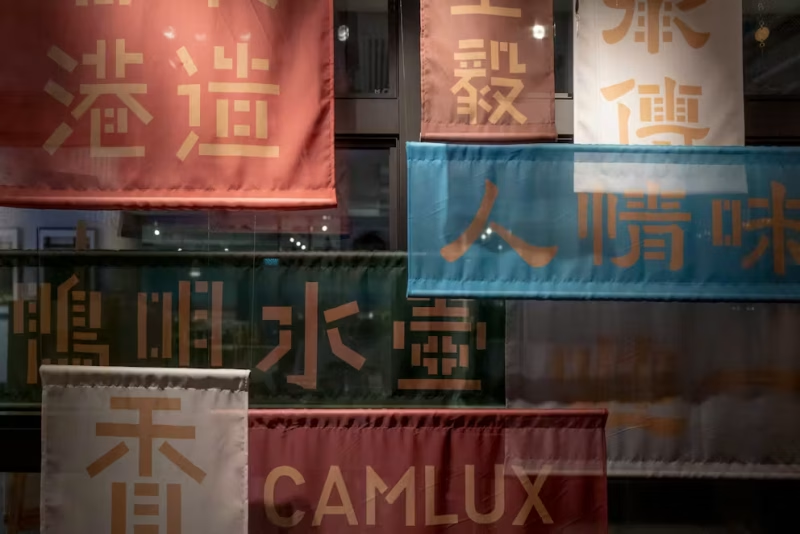
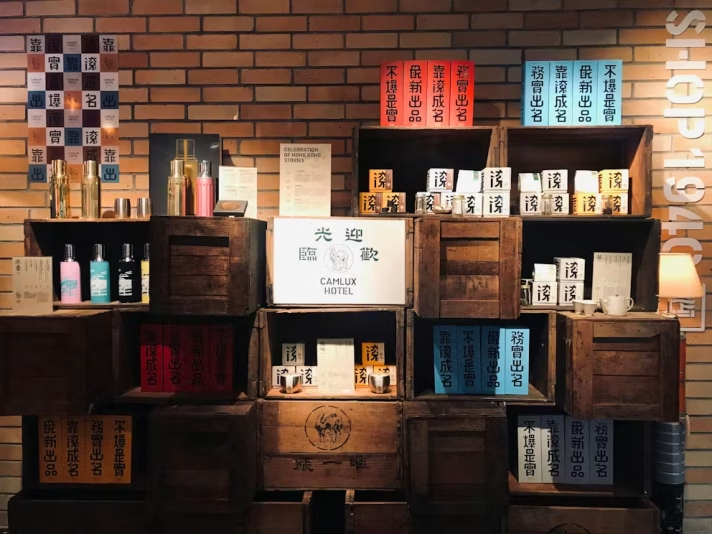
A very contemporary interior design element has been created from the products that were once produced in the space.
To take another example, the wall lamps in the guest rooms were also fashioned from vacuum flasks, and many of the wall hangings on display throughout the hotel are based on old posters or various other industrial elements.
Accommodation
The hotel has 185 rooms measuring from 22 to 32 square metres. There are four room types, including 103 cosy rooms, 70 comfy rooms, 10 family rooms, and two studios.
All rooms have complimentary Wi-Fi, smart TVs, and rain showers in the bathrooms. The beds have Simmons pocketed coil mattresses.
I stayed in room 582, a comfy room measuring 28 square metres. I particularly liked the long entry hall with a few steps leading into the room.


It was a corner room with a view of the Victoria Harbour in the distance from one window and the Hongkong Post Central Mail Centre across a street lined with palm trees from the other.
My room had a long counter, which served as a comfortable work space during my stay. There was a rack suspended from one wall to hang clothes on.
A mini-fridge had not yet been installed, but should have been by the time you read this. The bathroom had a large walk-in rain shower.
Food + Beverage
The hotel has a café serving a simple buffet breakfast in the morning, set lunches, and a la carte dishes throughout the rest of the day.
Set lunches include a chef’s daily soup and bread, a farmer’s mixed salad, a selection of six main dishes, and coffee or tea.


I ordered dinner from the a carte menu, which had five choices. The Mongolian style shredded spicy lamb wraps with julienne of cucumber, coriander, and chili dipping sauce was light and tasty, with a hint of spice.
Other dishes offered during my stay included daily curry, buffalo chicken wings (six pieces), smoked salmon and prawn spaghetti, delicious club sandwich, and pastry chef’s daily recommendation with coffee or tea.
Beverages include imported beer, mineral water, fresh juice, coffee, and tea.
Facilities
The hotel has a 24 hour gym with three cardio-vascular machines, including a tread mill, a stationary bicycle, and a cross-trainer.

There is a meeting and conference room. The hotel offers laundry and dry-cleaning services and an on-class medical service.
The hotel can store luggage and offers an in-town shuttle bus service.
Location, Location, Location
The hotel is located in Kowloon Bay, a old residential and industrial neighborhood that is slowly undergoing gentrification.
Along with neighboring Kwun Tong and Ngau Tau Kok, East Kowloon – as the district is collectively known – is being developed into a second Central Business District for Hong Kong.
The hotel is a short walk from Kellett The British International School in Hong Kong, Hongkong Post Central Mail Centre, E-Max WearHouse, Goldin Financial Centre, and the Kowloon Bay International Trade and Exhibition Centre.


The hotel is also within walking distance of ZCB – the Zero Carbon Building, Enterprise Square Five, MegaBox, Telford Plaza, and the Construction Industry Council.
The hotel is a 15 minute walk of the Kowloon Bay MTR station. It is a short taxi ride from Amoy Plaza, an upscale shopping mall with lots of food and beverage outlets.
Recommended: a Definitive Guide to Kowloon Bay>>
Interview with the Hotel’s General Manager

Calvin Wong – General Manager of Camlux Hotel.
When was the company established?
It was established in 1940.
When was the building built?
It was completed in 1986.
Why did the company decide to turn the factory into a hotel?
Kowloon Bay has been emerging with new commercial buildings in recent years, and the rapid eclectic developments have led to the demand of introducing a quality hotel in the area.
What were the challenges of converting an old factory building into a hotel in terms of government regulations?
None really, and the project team managed to meet with the requirements.
What were the challenges of converting an old factory into a hotel in terms of design and structural issues?
Being a conversion project, the team embraced the inherent limitations and constraints, and explored and sometimes “magnified” these conditions to create interesting spatial experience, in terms of room configurations and viewing aspects for hotel guests.
How would this be different from a hotel being built from the ground up?
Unlike new built projects, these variations are not of superficial décor, but the result of immense physical challenges derived from converting an industrial building into a hotel property.
Can you give any examples?
For instance, as a double-fronted site of 30 metres wide by 50 metres long, the team boldly inserted two generously sized courtyards into the middle of the existing structure to facilitate an additional 103 rooms, which would otherwise not have been possible due to Building Regulations restrictions.

This also increased natural light penetration into the heart of the hotel, providing ample daylight into the hotel guestrooms and corridors, which would be unusual in a newly built.
Who was the architect?
T.S. Chu Architects Ltd. in collaboration with Mr. Raymond Leung, developer of Camlux Hotel and Managing Director of Camlux Hospitality Limited. The design brief was answered in the above question.
Who is the hotel targeted at?
The hotel targets international and local guests from the commercial sector in the burgeoning Kowloon Bay area.
What makes this property unique?
Camlux Hotel is the first hotel landmark in Kowloon Bay, and it was inspired by the manufacturing history of its owning company.

Referenced elements of Camel can be found throughout the hotel, such as the wall lamp shades reminiscent of practical and colourful vacuum flasks.
The lobby floor also features a playful compilation of various materials that were used to manufacture the vacuum flasks like brass, copper, stainless steel, glass, and coloured plastics as well as the reception desk, which is clad with glass vacuum inners.
What about the artwork found in the rooms?
Original large format blueprints of the factory building and other technical drawings such as the furnace once located on the building’s second the third floors and vintage Camel packaging design work and hand drawn technical drawings from the 1950’s, 60’, and 70’s can be found in the hotel’s rooms.

Is this hotel a one off, or does the company have plans to open more hotels?
Under review, not at the moment.
I understand that the company still produces vacuum flasks in Hong Kong. Where are the factories located?
They are currently located in Hung Hom and San Po Kong.
Why have you kept production in Hong Kong rather than moving it to China?
Camel prides themselves as a homegrown brand, and until today, the producer still keeps their manufacturing process of flasks all in Hong Kong.
I understand that there is still a market for vacuum flasks. Any plans to sell them at the hotel? Wouldn’t they make nice souvenirs for hotels guests and/or locals?
The hotel has plans to sell them as souvenirs in the future.
Where
Camlux Hotel, 15 Wang Kwong Road, Kowloon Bay, Kowloon, Hong Kong. Telephone: (852) 2593-2828.
Check guest reviews and room rates at TripAdvisor/Camlux Hotel
What’s happening in the ‘hood?
Click here for a Definitive Guide to Kowloon Bay>>


The design looks quite trendy! A welcome addition to Kowloon Bay!